


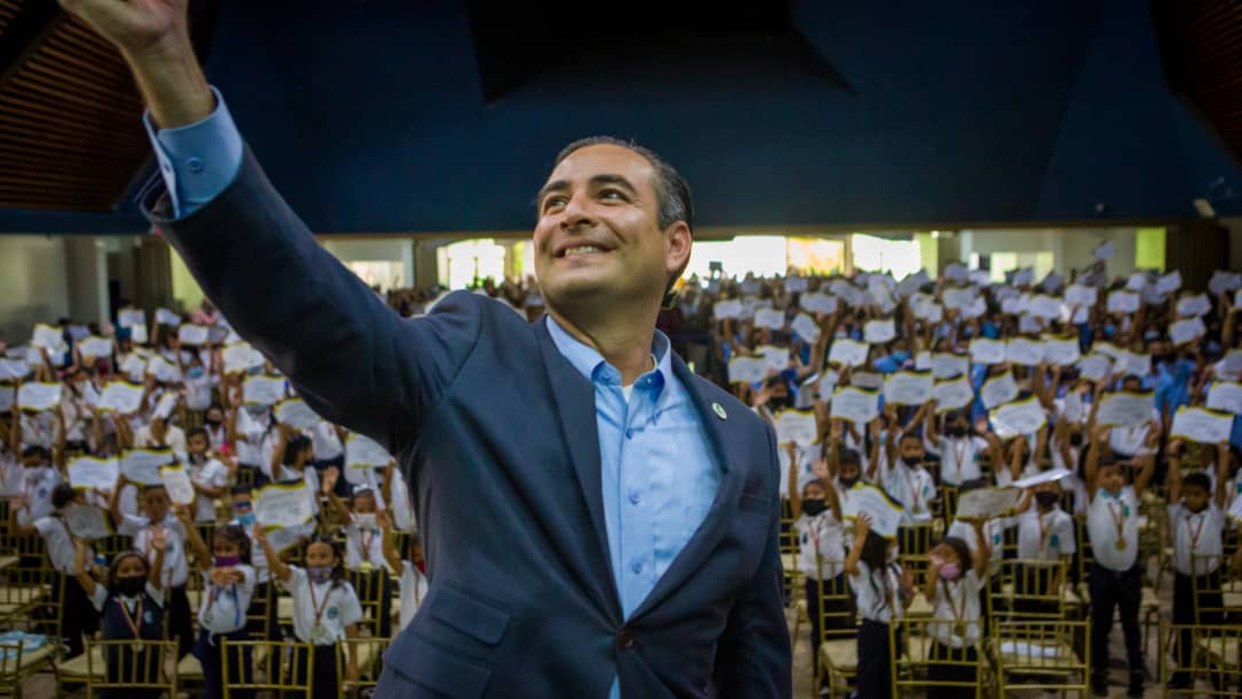

Caracas.- El alcalde Darwin González junto a la Dirección de Educación y varios directores entregaron certificados a los alumnos con las mejores calificaciones en los 83 colegios municipales y privados del municipio Baruta.
La Alcaldía de Baruta otorgó el premio a la Excelencia Académica a cuatro mil quinientos cincuenta y cinco estudiantes pertenecientes a instituciones educativas municipales y privadas, en el Club Italovenezolano.
La premiación del período escolar 2021-2022 se llevó a cabo durante 4 días de actos, con la participación de representantes y directivos de cada colegio.
El Alcalde enfatizó la importancia de la disciplina en los niños y jóvenes, porque son el reflejo de que cuando se quiere se puede. Así mismo, reconoció la labor de los docentes por su mística y loable labor tan importante como es la enseñanza y la educación.
“Este es nuestro cuarto reconocimiento durante mi gestión, premiando la meritocracia y la excelencia estudiantil” señaló González.
Por otra parte, el mandatario local indicó que las ocho escuelas municipales se encuentran en total funcionamiento y se mantienen los convenios con ONG internacionales las cuales han garantizado el almuerzo y merienda en las instituciones, favoreciendo positivamente el aumento de la matricula escolar.
Para el próximo año escolar, el alcalde anunció que se estará lanzando una campaña anti bulliying para generar conciencia y educar sobre el tema que tanto afecta a los jóvenes hoy en dïa.
La Alcaldía de Baruta otorgó el premio a la Excelencia Académica a cuatro mil quinientos cincuenta y cinco estudiantes pertenecientes a instituciones educativas municipales y privadas, en el Club Italovenezolano.
La premiación del período escolar 2021-2022 se llevó a cabo durante 4 días de actos, con la participación de representantes y directivos de cada colegio.
El Alcalde enfatizó la importancia de la disciplina en los niños y jóvenes, porque son el reflejo de que cuando se quiere se puede. Así mismo, reconoció la labor de los docentes por su mística y loable labor tan importante como es la enseñanza y la educación.
“Este es nuestro cuarto reconocimiento durante mi gestión, premiando la meritocracia y la excelencia estudiantil” señaló González.
Por otra parte, el mandatario local indicó que las ocho escuelas municipales se encuentran en total funcionamiento y se mantienen los convenios con ONG internacionales las cuales han garantizado el almuerzo y merienda en las instituciones, favoreciendo positivamente el aumento de la matricula escolar.
Para el próximo año escolar, el alcalde anunció que se estará lanzando una campaña anti bulliying para generar conciencia y educar sobre el tema que tanto afecta a los jóvenes hoy en dïa.
Siguenos en
Telegram,
Instagram,
Facebook y
Twitter
para recibir en directo todas nuestras actualizaciones